Key takeaways
- Use one handoff event as the evidence unit.
- Observe required fields present, owner acceptance, unresolved items, later clarification.
- Keep selection and rival explanations visible.
- Do not infer causation or personal merit.
Table of contents
Question, scope, and unit of analysis
How Could Teams Study Remote Onboarding Handoff Completeness? This brief proposes one handoff event as the unit of analysis. It examines a local onboarding process, not an employee trait, a validated benchmark, or a market-wide outcome.
Scope is limited to work recorded under a defined instruction and review window. Hiring, compensation, clinical, legal, credential, and automated performance decisions are excluded.
| Element | Record | Inference limit | Use |
|---|---|---|---|
| Context | Task and instruction version | Does not prove ability | Define comparable cases |
| Trace | handoff event | Depends on complete capture | Reconstruct the event |
| Measures | required fields present, owner acceptance, unresolved items, later clarification | No validated threshold | Inspect local patterns |
| Boundary | Named decision owner | Metric cannot replace judgment | Hold or refine pilot |
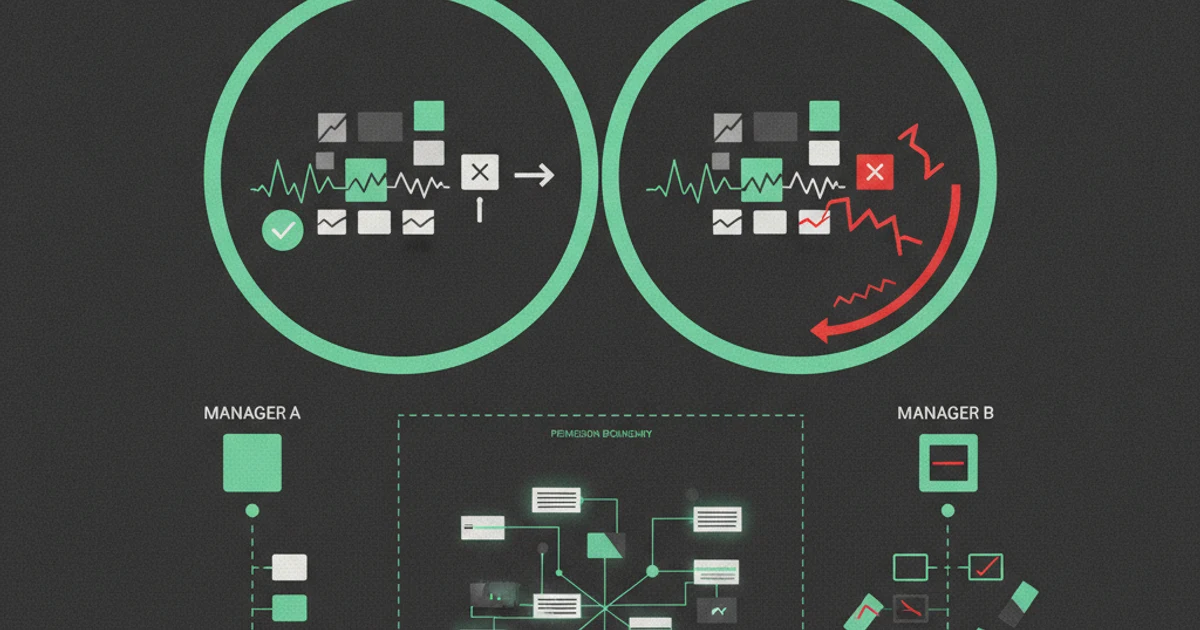
Methodology and source use
This is a documentary synthesis of three public sources. NIST informs accountable control evidence, AHRQ informs closed-loop communication and handoffs, and IES informs practice and transfer. Applying those concepts to onboarding is an OnboardingEmployees inference, not a result reported by the sources.
No employee data, customer records, interviews, experiment, or production credentials were used. Source concepts and proposed operational measures are deliberately separated.
Proposed measures
For each handoff event, record the task, instruction version, access state, timestamps, participant action, reviewer decision, correction, and final disposition. The proposed measures are required fields present, owner acceptance, unresolved items, later clarification.
Definitions should be fixed before sampling. Keep the selection reason and preserve consequential exceptions so omitted or easy work does not distort interpretation.
Analysis and rival explanations
Compare only reasonably similar work periods. Apparent differences may arise from prior experience, case difficulty, missing access, reviewer delay, changed tools, incomplete capture, or reviewer disagreement rather than learning.
Inspect event traces before averages. Long duration may represent prudent waiting, while a low exception count may reflect under-reporting. Dual-review a small subset to expose ambiguous criteria.
Privacy, authority, and use
Collect the minimum evidence needed, redact sensitive source material, restrict access, define retention, and allow inaccurate records to be corrected. A metric must not silently become surveillance or an automated employment decision.
Named managers retain consequential authority. Participants may record observations and suggest a next step; authorized people approve exceptions, access, external release, and irreversible action.
Limitations and next step
This untested design cannot establish causation. Small or selected samples, changing work, missing events, reviewer drift, and local context limit generalization. The cited sources do not validate these measures or any threshold.
A defensible next step is a bounded pilot with preregistered definitions, ordinary and exception cases, dual review, and a stop rule. Treat findings as provisional until repeated under comparable conditions.
Sources and methodology
Documentary synthesis of NIST, AHRQ, and Institute of Education Sciences guidance mapped to a proposed local onboarding record. No employee data or experiment was used; all measures are analyst proposals.
- NIST SP 800-53 Rev. 52020, updated 2025. Control guidance covering accountability, access, configuration, and assessment evidence.
- AHRQ TeamSTEPPS 3.02023. Teamwork guidance covering handoffs, check-backs, escalation, and shared awareness.
- Institute of Education Sciences practice guide2007. Research-based recommendations concerning worked examples, retrieval, spacing, and transfer.
Source count: 3. Last verification date: September 9, 2026.
Related research
FAQ
What is the unit of analysis?
One handoff event.
What can the design conclude?
It can describe patterns in a bounded local sample; it cannot establish causation or a universal standard.
What are the main limitations?
Selection bias, incomplete records, changing tasks, reviewer differences, and local context.
Who makes consequential decisions?
Named authorized people, never an onboarding metric by itself.
Review the full research library, compare cluster coverage inside recruiting operations, and pair these findings with our VA candidate screening support.