Key takeaways
- Do notification coverage gaps explain delayed remote onboarding responses?
- The proposed unit is the notification-to-action event trace.
- Measures: covered delay, receipt evidence, acknowledgment delay, and missed-escalation count.
- Consequential decisions remain with named authorized people.
Table of contents
Research question and scope
Do notification coverage gaps explain delayed remote onboarding responses? Managers can mistake a convenient sample for proof of readiness. This analysis defines one bounded observation using a remote coordinator receiving fictional tasks across defined coverage windows. It separates what public guidance says from the local study design.
FAA Human Factors Design Standard, AHRQ TeamSTEPPS 3.0, and NIST SP 800-92 contribute principles for communication, evaluation, learning, records, or measurement. None reports an OnboardingEmployees trial or a universal remote-onboarding threshold. Their use here is conceptual and explicitly limited.
| Evidence element | Recorded field | Interpretation limit | Decision use |
|---|---|---|---|
| Question | Do notification coverage gaps explain delayed remote onboarding responses? | No causal estimate | Define the observation |
| Scenario | a remote coordinator receiving fictional tasks across defined coverage windows | Fictional practice only | Bound the sample |
| Trace | notification-to-action event trace | Requires complete capture | Reconstruct the decision |
| Measures | covered delay, receipt evidence, acknowledgment delay, and missed-escalation count | No universal threshold | Compare stable cases |
What the sources contribute
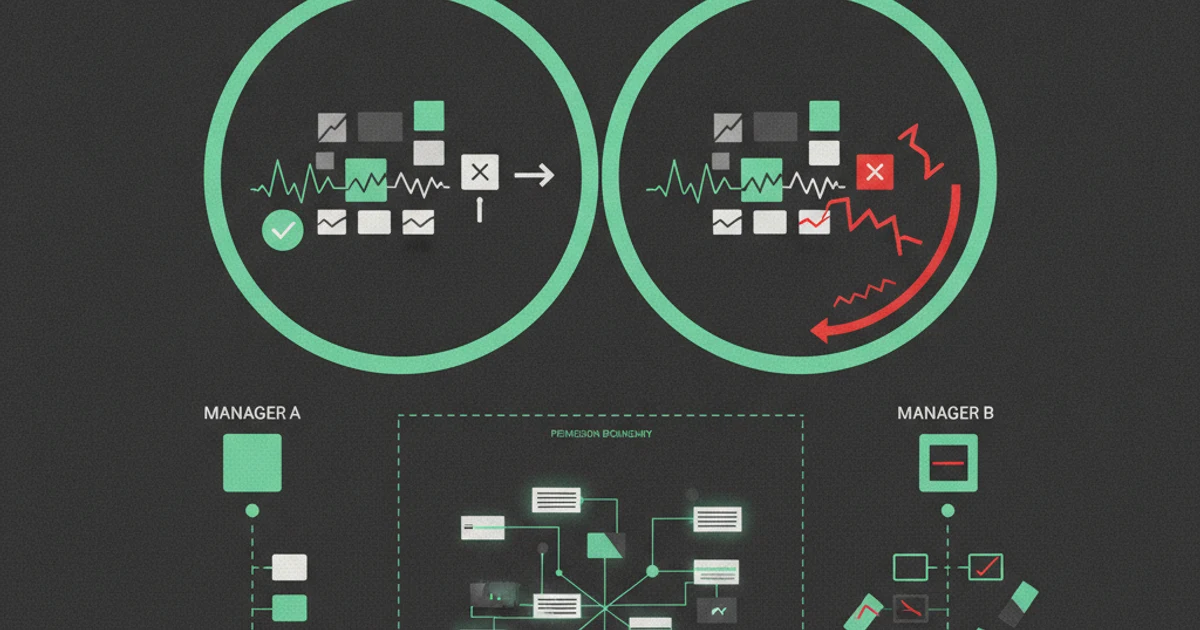
The notification-to-action event trace preserves the task class, controlling instruction, cue, employee action, assistance, reviewer decision, and outcome. Missing fields remain missing. Reviewers should not reconstruct a favorable path after seeing the result.
The proposed measures are covered delay, receipt evidence, acknowledgment delay, and missed-escalation count. Every rate retains its numerator, denominator, exclusions, and raw case labels. Averages alone can conceal a rare but consequential unsupported action.
Measurement design
Use fictional, reversible cases. The employee may prepare, classify, compare, and route work. Named authorized people retain employment, legal, financial, credential, security, external-contact, and irreversible decisions. A correct stop can therefore be stronger evidence than fast completion.
Competing explanations must remain visible. Case difficulty, prior exposure, manager hints, source access, workload, and coverage can change the observed result. Record these conditions rather than attributing every difference to the learner or the intervention.
Rival explanations
A useful comparison changes one meaningful feature while holding the consequence class and governing rule stable. If several conditions change, label the attempt exploratory. Do not present it as a clean before-and-after estimate.
Management can use the finding to revise one instruction, routing rule, review practice, or training case. It cannot justify unrestricted access or a global performance label. Any scope increase should name the task class and continuing review condition.
Decision limits and conclusion
This is documentary synthesis and a proposed local observation, not an employee experiment. It provides no causal estimate and no universal benchmark. The defensible conclusion is conditional: do notification coverage gaps explain delayed remote onboarding responses? can be examined when the trace, sample, assistance, and decision boundaries remain visible.
Future observations should be scheduled before results are known. Missing follow-up cases should remain unresolved rather than counted as success. Retention and privacy rules still apply to every practice record.
Sources and methodology
Documentary synthesis of three public sources mapped to a remote coordinator receiving fictional tasks across defined coverage windows. No employee records, outcome experiment, or company-specific findings were used.
- FAA Human Factors Design StandardAccessed September 4, 2026. Public guidance used for bounded methodological context; not a direct study of this onboarding scenario.
- AHRQ TeamSTEPPS 3.0Accessed September 4, 2026. Public guidance used for bounded methodological context; not a direct study of this onboarding scenario.
- NIST SP 800-92Accessed September 4, 2026. Public guidance used for bounded methodological context; not a direct study of this onboarding scenario.
Source count: 3. Last verification date: September 4, 2026.
Related research
FAQ
What is the research question?
Do notification coverage gaps explain delayed remote onboarding responses?
What is the unit of analysis?
The proposed unit is the notification-to-action event trace.
What does the evidence not prove?
It does not prove causation, a universal threshold, or unrestricted readiness.
Who retains consequential decisions?
Named authorized people retain policy, employment, legal, security, financial, credential, contact, and irreversible decisions.
Review the full research library, compare cluster coverage inside recruiting operations, and pair these findings with our VA candidate screening support.